
The inventory ledger add-on gives WP Inventory Manager a transaction record for every item: stock received, stock sold, stock reserved, each with a date, a quantity, a cost and a value. Record increases and decreases from the item edit page or from the Ledger screen, and set how much of it runs on its own. A reservation from your website can reduce the quantity automatically, create a pending ledger entry that waits for your approval, or leave the ledger alone for fully manual control.
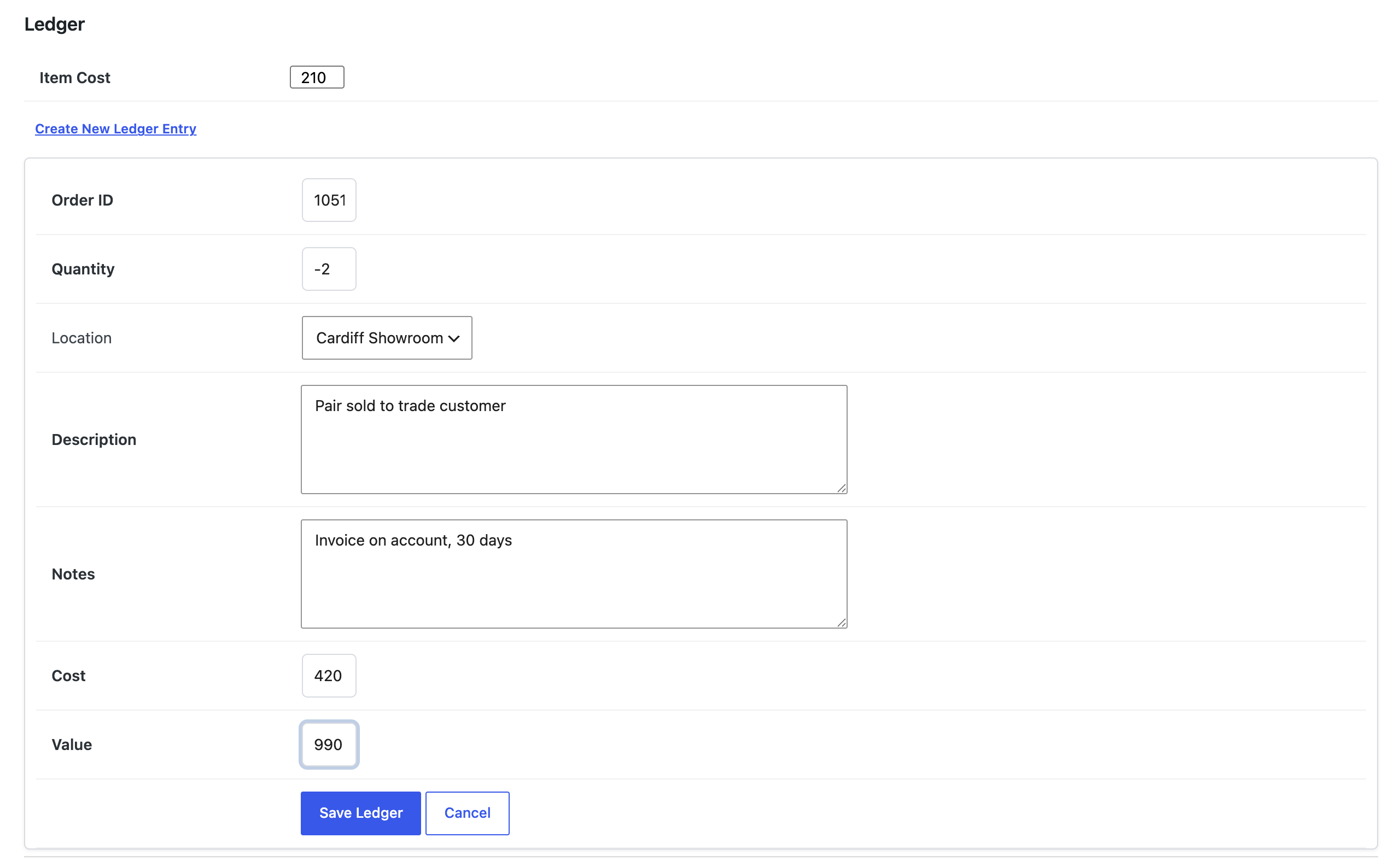
Invoices from your inventory ledger
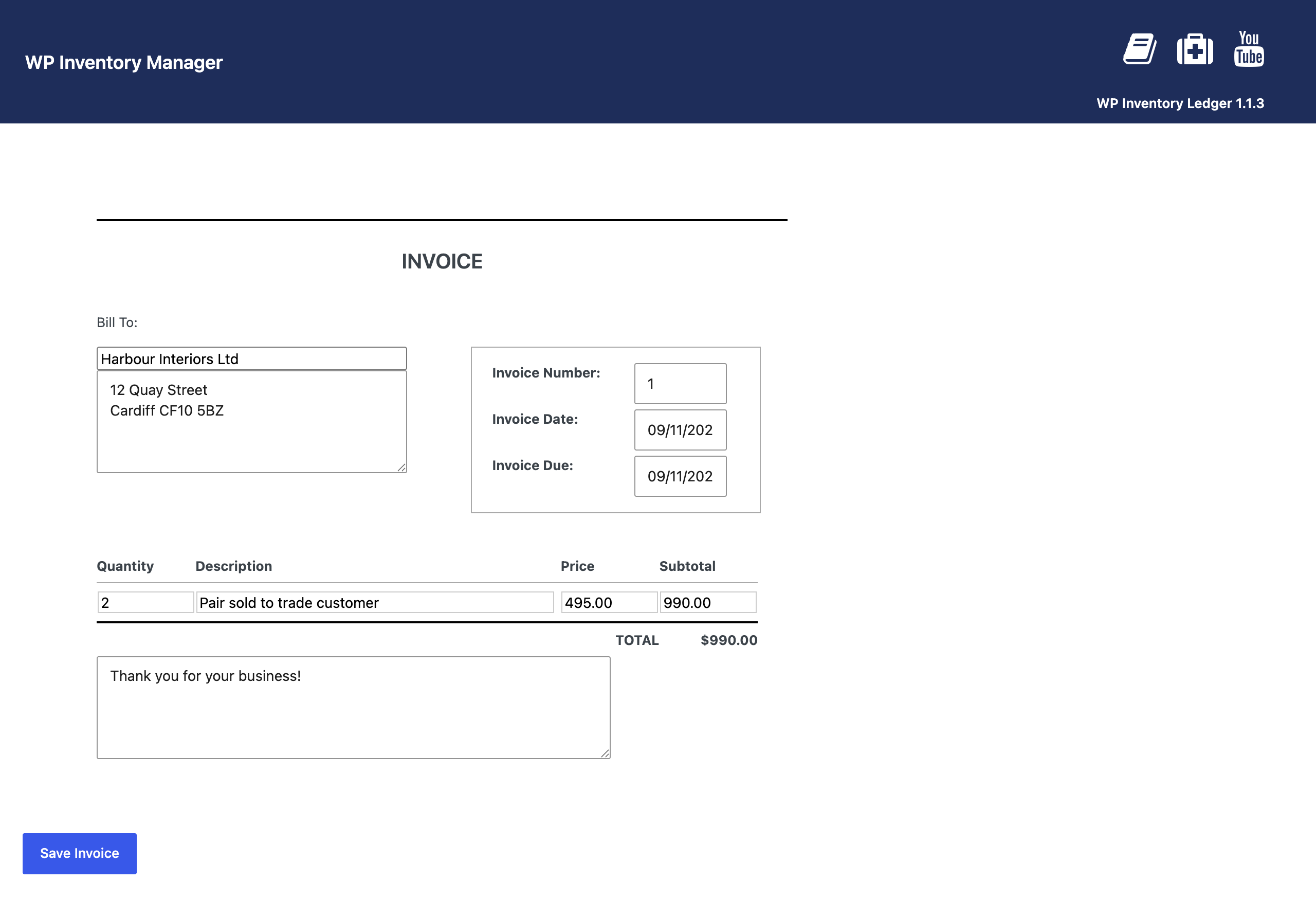
Any ledger entry can become a line on an invoice. Tick the entries you want to bill, create the invoice, add the customer details and confirm the prices, and save it. Set up an invoice template once in the settings, with your own header and terms, and every invoice after that takes a few clicks.
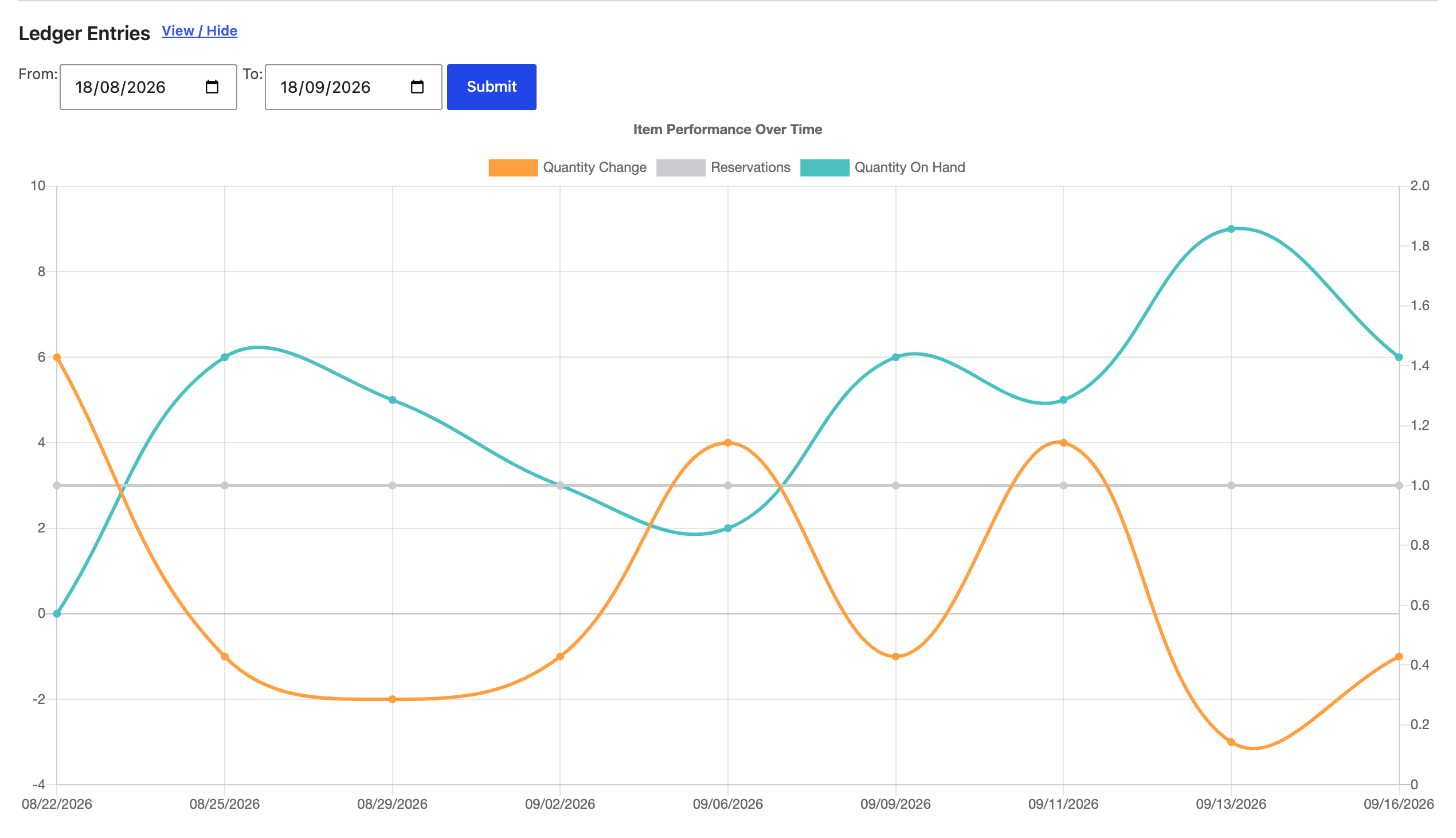
Each item also gets an item performance graph on its edit page. Pick a date range and the graph plots the quantity change, the reservations and the quantity on hand for that period, so you can see at a glance when stock came in, how quickly it went out, and whether reservations are driving the movement. Click a series in the legend to hide it and focus on the others.
Because every entry carries a cost as well as a value, the inventory ledger add-on doubles as a simple stock accounting record: what you paid for the stock you hold, what you sold it for, and what each item has earned over time, without exporting anything to a spreadsheet. It works with the Reserve Cart add-on, so reservations made through the cart are recorded as well, and with the Locations Manager, so each entry can record which location the stock moved from. If you are new to the idea, our post on what an inventory ledger is and why small inventories need one is a good starting point; the documentation covers every setting, and there is a short demo on YouTube.
(Note: This add-on requires a licensed copy of the WP Inventory Manager)
