How-to

WP Inventory Manager vs ATUM: Which One Do You Actually Need?

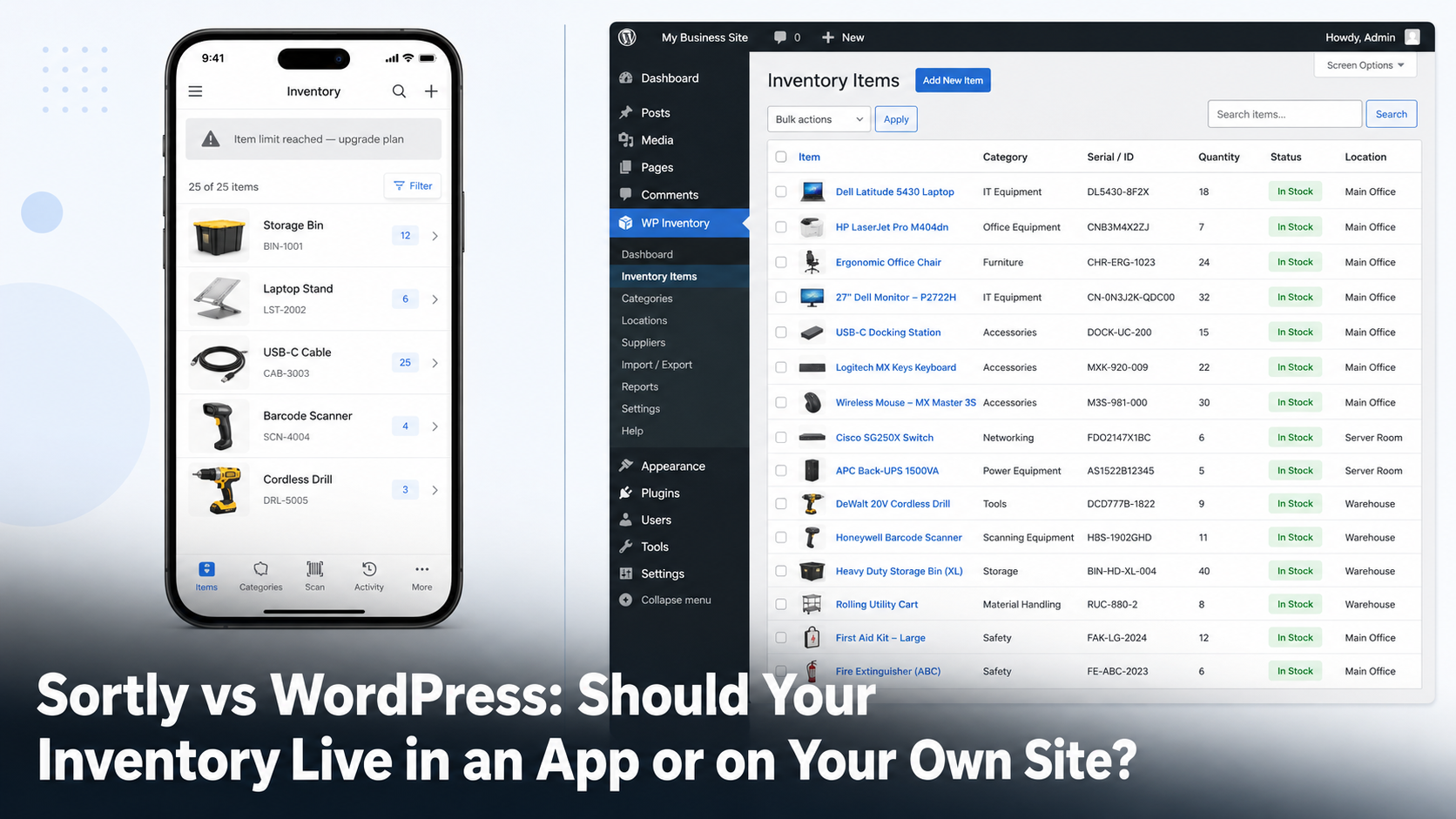
ATUM and WP Inventory Manager are the two most-searched WordPress inventory plugins. Both have free versions. Both have strong user bases. But one requires WooCommerce to even activate and the other works on any WordPress site, with or without a store. That difference determines which one is right for you.

The One Difference That Decides Everything

ATUM requires WooCommerce. Its full name is “ATUM WooCommerce Inventory Management and Stock Tracking.” Without WooCommerce installed and active on your site, ATUM will not run. It is a WooCommerce extension, not a standalone inventory tool.

WP Inventory Manager requires nothing but WordPress. It runs on any WordPress site, with WooCommerce installed, without it, or on a site that has never touched an online store. It is completely independent.

If you are not running a WooCommerce store, this comparison is already settled. WP Inventory Manager is the only option of the two that will work for you.

What ATUM Does Well

ATUM is purpose-built for WooCommerce store operators who need more visibility into stock than WooCommerce’s native tools provide. Its flagship feature is Stock Central: a single dashboard showing all your WooCommerce products, quantities, low-stock status, supplier details, and total stock value in one view.

For an online retailer processing hundreds of orders a week, that overview is genuinely useful. ATUM also supports purchase orders, a manufacturing module, and barcode scanning. All in the Premium tier. These are serious operations features for ecommerce businesses at scale.

Best for: WooCommerce store operators managing a large product catalog with an order-driven fulfillment workflow.

What WP Inventory Manager Does Well

WP Inventory Manager is built for businesses that manage physical inventory in WordPress with or without a store. The plugin tracks items, quantities, categories, and custom fields, and displays your catalog on the front end via shortcode. It is its own system, not a WooCommerce extension.

That distinction matters more than it sounds. WooCommerce ties every stock change to a transaction. Every product lives inside the WooCommerce post type. If your inventory needs don’t revolve around checkout, you are installing a complex ecommerce platform to solve a problem that doesn’t require it.

Example: A gym tracks equipment available for member use: treadmills, kettlebells, resistance bands. None of it is for sale. There are no transactions. WooCommerce and ATUM are both irrelevant. WP Inventory Manager handles it out of the box: items, quantities, categories, and a front-end display members can browse.

Best for: Businesses tracking physical inventory outside the context of an online store: equipment, tools, assets, rental items, donated goods, or any inventory that isn’t tied to checkout.

Side-by-Side Feature Comparison

Feature WP Inventory Manager ATUM
Requires WooCommerce No Yes
Works without an online store Yes No
Free core version Yes Yes
Custom inventory fields Yes No (uses WooCommerce product fields)
Front-end inventory display Yes – shortcode No standalone display
Multi-location stock Yes – Locations Manager add-on Yes – Multi-inventory (Premium)
Low-stock email alerts Yes – Pro ($79/yr) Yes – Free tier
Purchase orders No Yes – Premium
Customer reservation system Yes – Reserve Cart add-on No
Paid tier pricing From $79 per year (Pro) or $199 per year (All Access) From ~$14.99 per month (Premium add-ons)

Who Should Choose WP Inventory Manager

  1. You don’t have WooCommerce installed. ATUM will not activate without it. WP Inventory Manager works on any WordPress site.
  2. Your inventory is not tied to online sales. Equipment, tools, assets, rental items, donated goods – if there’s no checkout involved, WPIM is built for this and ATUM is not.
  3. You need a customer-facing display. WPIM renders your catalog on the front end via shortcode. Visitors can browse and filter without a WooCommerce product page.
  4. You need custom fields. WPIM lets you add any data point to an inventory item: serial numbers, condition, supplier, last service date. ATUM uses WooCommerce’s fixed product fields.
  5. You want a lighter setup. WooCommerce adds checkout flows, payment gateways, and shipping zones. If you don’t need any of that, WPIM keeps your site clean and focused.

Who Should Choose ATUM

ATUM is the stronger choice if your primary concern is managing a large WooCommerce product catalog as part of an active ecommerce operation. Its Stock Central dashboard, purchase order support, and supplier management are genuinely valuable for an online retailer managing hundreds of SKUs with an order-driven workflow.

If WooCommerce is already the backbone of your business and you need more visibility into stock movement at the product level, ATUM extends that system well.

Getting Started With WP Inventory Manager

Install the plugin from the WordPress plugin repository or directly from wpinventory.com/downloads. Once active, the WP Inventory menu appears in your WordPress admin. From there:

  • Go to WP Inventory > Inventory Items to add and manage your stock records.
  • Go to WP Inventory > Categories to organise items into groups.
  • Add the inventory shortcode to any page to display your catalog on the front end.
  • Go to WP Inventory > Settings to configure low-stock alerts and user access (Pro required for email alerts).

The free version covers item tracking, categories, custom fields, and front-end display. Upgrade to Pro ($79 per year) for low-stock email alerts and quantity history, or to All Access ($199 per year) for multi-location tracking, a customer reservation system, and advanced search.

Browse all options at wpinventory.com/add-ons.

Frequently Asked Questions

Does ATUM work without WooCommerce?

No. ATUM requires WooCommerce to be installed and active. It is built as a WooCommerce extension and cannot function as a standalone inventory system.

Can WP Inventory Manager work alongside WooCommerce?

Yes, there is no technical conflict – both plugins can run on the same WordPress site simultaneously. However, they maintain completely separate catalogs with no syncing. WPIM items and WooCommerce products are two independent systems. If you need stock changes in one to reflect in the other, that would require a custom integration. Most users running WPIM are not running WooCommerce at all.

Which plugin is better for a small business with no online store?

WP Inventory Manager. It was built specifically for businesses that need to track physical inventory in WordPress without running an ecommerce store. ATUM is not an option for this use case.

How do low-stock alerts work in WP Inventory Manager?

With the Pro plan, go to WP Inventory > Settings and enable the low-quantity alert. Set the threshold quantity and the notification email address. When any item drops to or below that number, an email is sent automatically. Those items are also highlighted in red in the admin dashboard.

Can customers browse and reserve inventory without buying?

Yes, with the Reserve Cart add-on (included in All Access). Visitors can browse your catalog and submit a reservation request. No payment gateway or checkout is required. ATUM has no equivalent feature.

Why Your WordPress Inventory Keeps Going Out of Sync (And How to Fix It)

Wrong stock numbers are one of the most damaging problems a product-based business can have. You sell something you no longer have. A customer buys the last unit twice. Your purchase orders are based on counts that are days old. By the time you catch it, you’re already dealing with the fallout.

If your WordPress inventory keeps showing numbers that don’t match reality, the problem is almost always one of five things. Here is what each one looks like and how to fix it.

1. Stock Management Is Not Actually Turned On

This sounds obvious, but it’s the most common cause of inventory not tracking at all.

WordPress inventory plugins need stock management enabled at two levels: the global plugin setting, and the individual item level. If you turned it on globally but forgot to enable it on specific products, those products will never track quantity changes.

Fix: Go through your product list and confirm that stock management is active on each item. In WP Inventory Manager, this is a per-item setting in the inventory record. In WooCommerce, it’s under each product’s Inventory tab. A single unchecked box silently breaks tracking for that entire SKU.

2. Caching Is Showing Old Numbers

Your website uses caching to serve pages faster. That is normally good. But caching can hold onto old stock counts and show visitors a number that is hours out of date.

A customer sees “3 in stock.” They buy one. Your cache still shows “3 in stock.” Another customer buys one. You now have oversold.

Fix: Exclude product pages, cart, and checkout from your caching plugin’s rules. Most caching plugins (WP Rocket, W3 Total Cache, LiteSpeed) have an option to exclude specific page types or URLs. Set that up, then clear your cache manually any time you do a bulk stock update.

3. WP-Cron Is Stalling

WordPress uses a background task system called WP-Cron to run scheduled updates, including inventory syncs with third-party tools or automatic stock recalculations. The problem: WP-Cron only fires when someone visits your site. On a low-traffic site, those scheduled tasks can sit in a queue for hours before they run.

If your inventory numbers lag by one to four hours after a sale or stock update, this is almost certainly the cause.

Fix: Replace WP-Cron with a real server cron job. Your hosting provider can usually set this up in a few minutes. You schedule wp-cron.php to run every 5 minutes via your server’s task scheduler instead of relying on site traffic to trigger it. This alone eliminates the lag for most stores.

4. Two Plugins Are Updating the Same Field

This one is harder to spot because it does not fail loudly. Instead, stock counts drift in unpredictable directions.

When two plugins both write to the same inventory field, they overwrite each other. One plugin sets a product to 5 units. Another runs a sync and sets it to 12. The first one runs again and sets it back to 5. Your actual stock count becomes whatever ran last, not what is accurate.

This is common for stores that use a WooCommerce-centric inventory plugin alongside a separate inventory management plugin, or when a point-of-sale sync and an order management tool both update stock simultaneously.

Fix: Decide which plugin owns inventory data and disable stock management in the others. You should have exactly one source of truth for stock counts. If you are using WP Inventory Manager for physical stock tracking, turn off WooCommerce’s stock management so the two systems are not fighting each other.

5. Multi-Location Stock Is Tracked in One Bucket

If you sell from more than one location, warehouse, or channel and you are tracking all stock in a single field, your numbers will always be wrong.

Consider a retailer with a physical store and an online shop. A sale happens in the store. Nobody updates the WordPress inventory. The online store still shows the old count. The item gets sold online too. Now you have an angry customer and a hole in your inventory records.

Fix: Use a plugin that supports location-level stock tracking natively. WP Inventory Manager’s Locations Manager add-on lets you assign stock to specific locations so each site or warehouse has its own count. Fulfillment then pulls from the right bucket, not a shared pool that nobody fully controls.

How to Run a Quick Inventory Audit

Before you troubleshoot, you need a baseline. Here is a simple process:

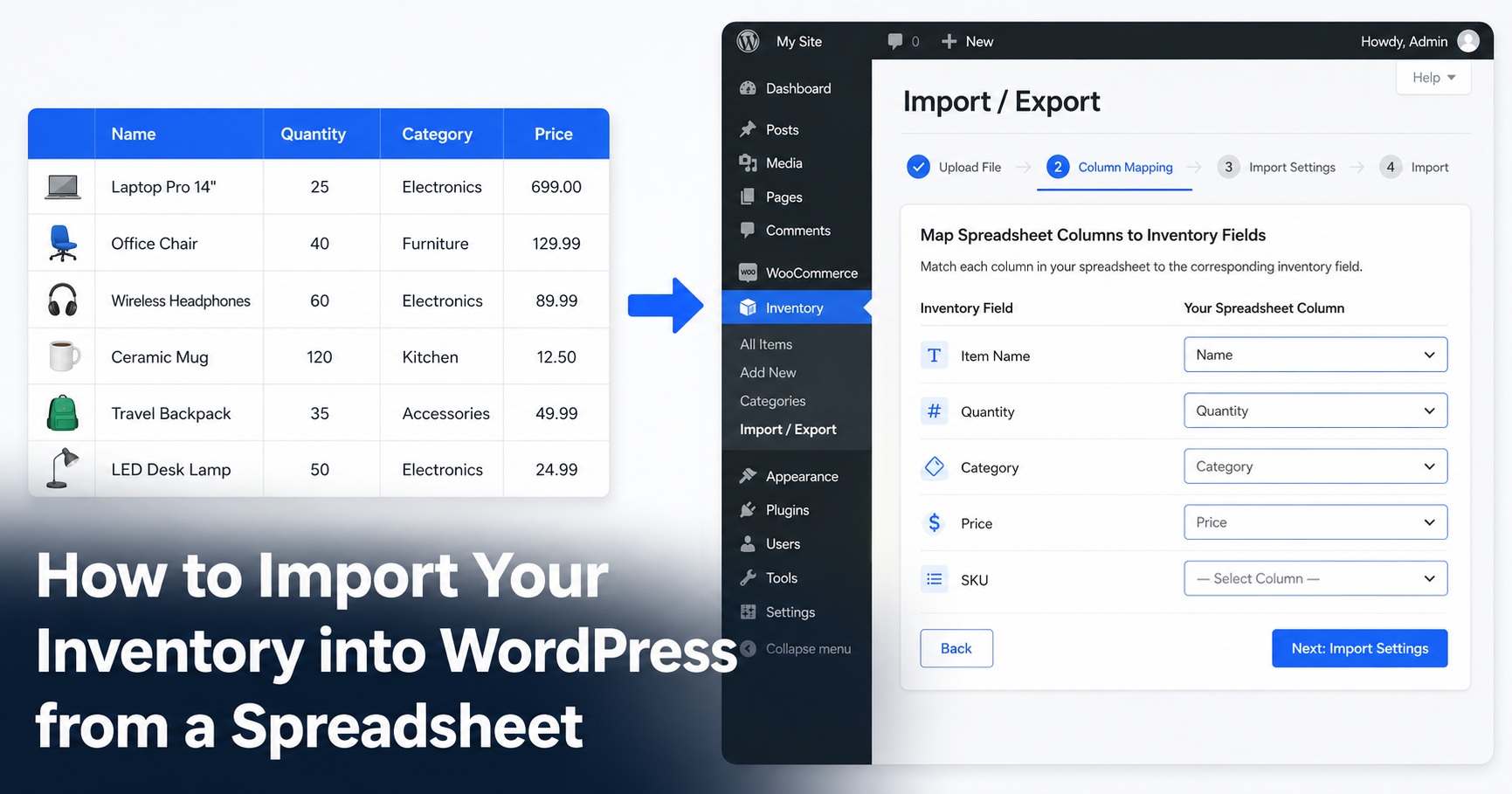
  1. Export your current stock counts from WordPress to a spreadsheet
  2. Do a physical count (or pull counts from your POS or warehouse system)
  3. Compare the two side by side
  4. Identify which items are off and by how much
  5. Check each discrepancy against the five causes above

Once you have found the pattern, you can fix the root cause instead of chasing individual wrong numbers.

When the Problem Is the Plugin Itself

Sometimes the issue is not configuration. Some plugins are simply not built to handle inventory accurately at scale. Signs you have outgrown your current setup:

  • Stock counts change for no apparent reason
  • Bulk updates do not save consistently
  • The plugin has no audit log so you cannot trace when a count changed
  • You are manually correcting numbers more than once a week

WP Inventory Manager is built specifically for this. It works without WooCommerce, supports multi-location tracking, keeps a record of stock changes, and does not fight with your other plugins over the same database fields. You can start with the free version and add capabilities as your business grows.

Frequently Asked Questions

Why is my WordPress inventory showing the wrong stock count?

The most common causes are caching serving stale numbers, two plugins writing to the same field, or stock management not being enabled at the product level. Start by checking each of those in order.

Why does my inventory update slowly after a sale?

If there is a delay of one to several hours, the likely cause is WP-Cron stalling. WP-Cron depends on site traffic to run. Replace it with a real server cron job and the lag disappears.

Can I track inventory across multiple locations in WordPress?

Yes, but you need a plugin that supports it natively. WP Inventory Manager’s Locations Manager add-on assigns stock to individual locations so each has its own accurate count.

What happens when two inventory plugins conflict?

They overwrite each other’s data unpredictably. The result is stock counts that drift in random directions. Pick one plugin to own inventory data and disable stock management in the others.

Do I need WooCommerce to manage inventory in WordPress?

No. WP Inventory Manager works independently of WooCommerce. If you are not running an online store or want cleaner inventory tracking without WooCommerce’s overhead, it is a direct alternative.

How to Manage Inventory in WordPress Without WooCommerce (Full Guide)

Most inventory management guides for WordPress assume one thing: that you’re running a WooCommerce store. You’re not. Or at least, you shouldn’t need to be.

WordPress powers more than 40% of the web and thousands of businesses use it to manage physical stock that has nothing to do with an online shopping cart. A gym tracking equipment checkouts. A nonprofit managing donated goods. A retailer with two locations who just wants to know what’s on the shelf.

This guide covers how to build a real inventory system inside WordPress, from basic setup to multi-location tracking, without bolting on a full ecommerce platform you don’t need.

Why WooCommerce Is Not Always the Answer

WooCommerce is excellent at what it does: running an online store. Its inventory features are designed around the transaction, they help you prevent overselling and update stock when orders come in.

But inventory management is broader than order fulfillment. Consider:

  • You need to track tools loaned to staff, not sold to customers.
  • You have products across two physical locations and need to see stock at each one.
  • You want customers to browse your catalog online, but you handle orders offline.
  • You run a WordPress site that isn’t a store at all.

WooCommerce adds significant weight to your site: checkout flows, payment gateways, shipping zones, none of which you need if you’re not selling online. A dedicated inventory plugin keeps things lean and focused.

What a WordPress Inventory System Actually Needs

Before choosing a tool, it helps to know what you’re solving for. A functional inventory system inside WordPress should handle five things:

  1. Item records: Each piece of stock has a name, description, quantity, and any custom fields you need (SKU, location, serial number, condition, etc.).
  2. Categories: Grouping inventory into categories keeps large catalogs browsable. A hardware shop might use categories like Tools, Fasteners, and Safety Equipment.
  3. Stock quantity tracking: You need to know what’s on hand, set low-stock thresholds, and get alerts before you run out.
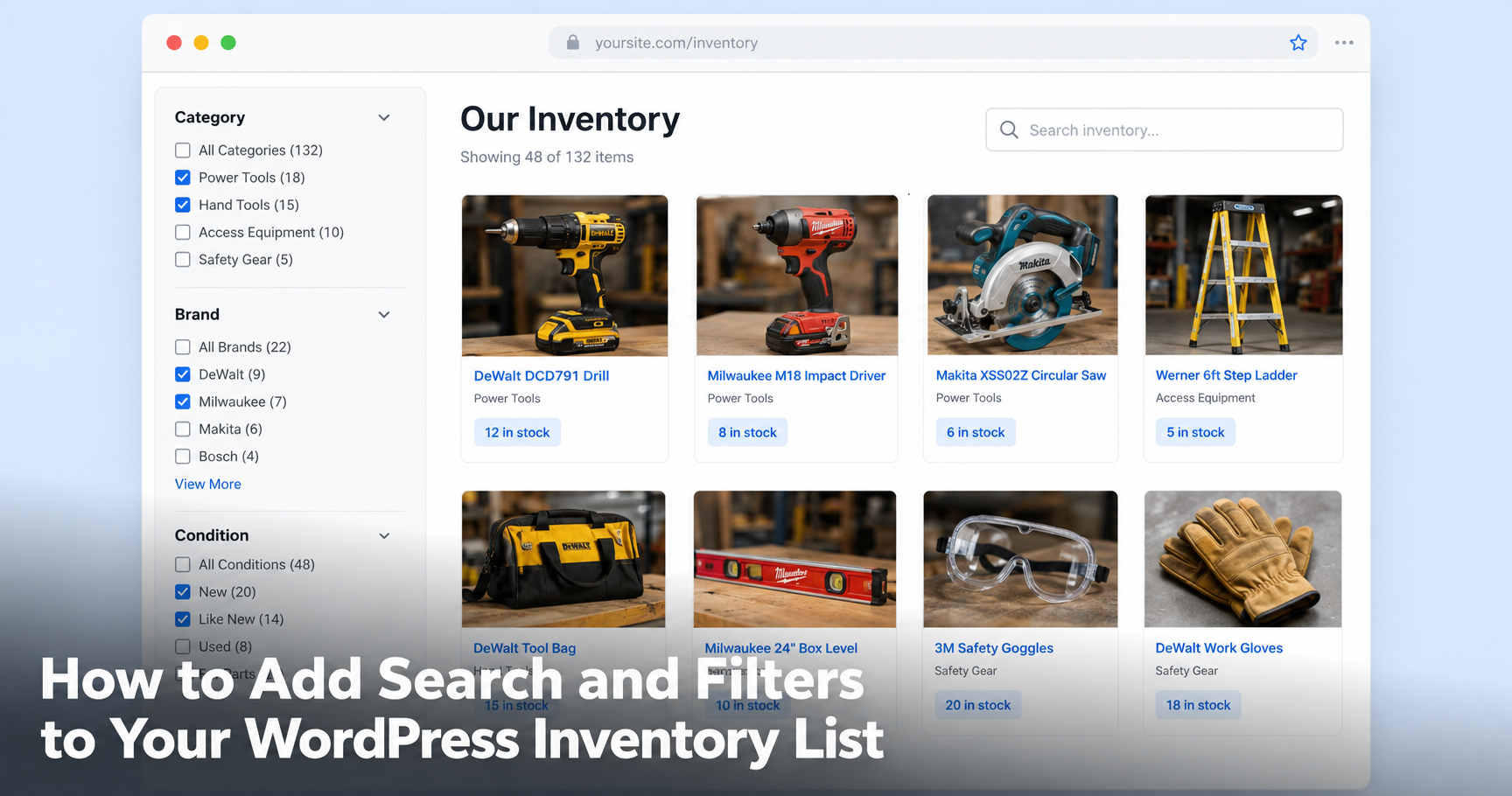
  4. Search and filtering: As inventory grows, your team needs to find items fast. Searching by keyword, filtering by category or custom field, or sorting by quantity saves real time.
  5. Display and access control: Whether you’re showing inventory to customers, staff, or just managing it internally, you need control over who sees what and how it looks on the front end.

Everything else: multi-location, reservations and advanced reporting builds on these five foundations.

Setting Up WP Inventory Manager: The Basics

WP Inventory Manager is a WordPress-native plugin built specifically for this. The free version covers the five foundations above. Here’s how a typical setup looks:

Install and Activate

Download WP Inventory Manager from the WordPress plugin repository or from wpinventory.com. Install it via Plugins > Add New in your WordPress admin then activate.

Add Your First Item

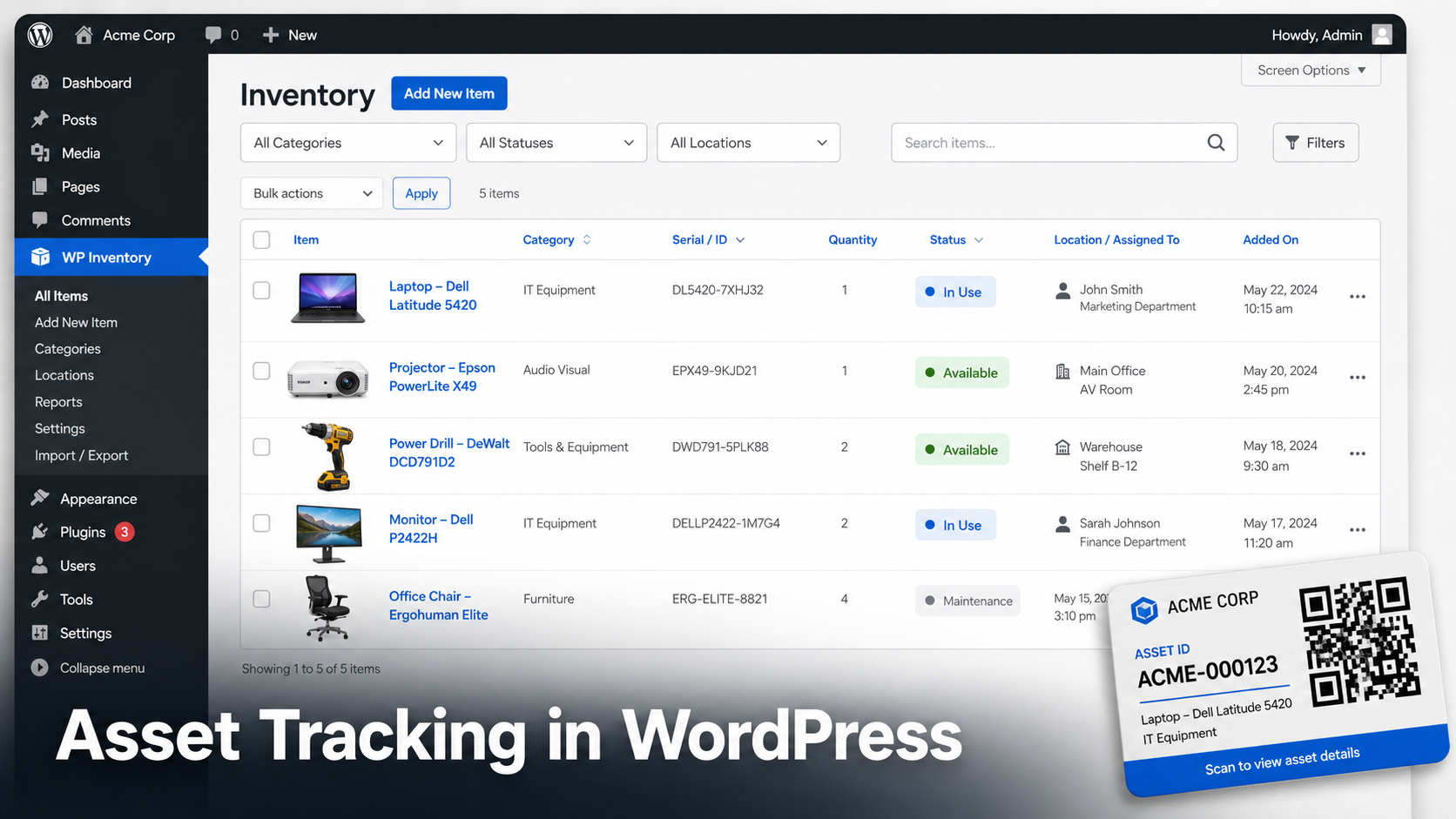
Go to WP Inventory > Add Inventory. Fill in the item name, description, quantity and any other fields you want to track. You can upload an image, assign a category and set a low-stock threshold right from this screen.

Example: A small art supply shop adds “Titanium White Oil Paint (40ml)” with a quantity of 24, a low-stock alert set at 5, and a category of “Oil Paints.” Any staff member logging into WordPress can now check and update this item without touching a spreadsheet.

Create Categories

Go to WP Inventory > Categories and build out your category tree. Categories can be nested, for instance “Paints > Oil Paints” or “Tools > Power Tools > Drills.”

Display Inventory on the Front End

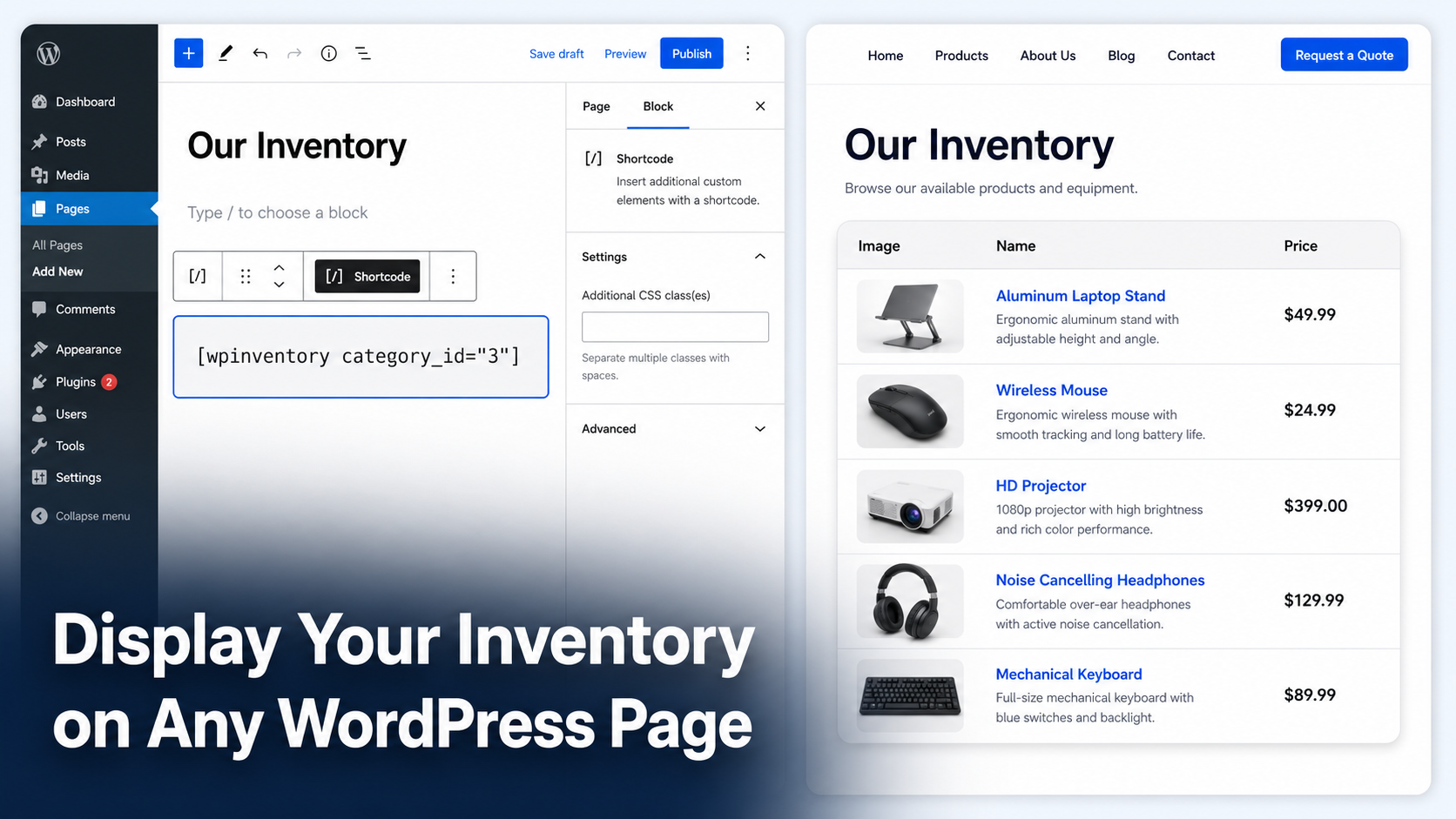
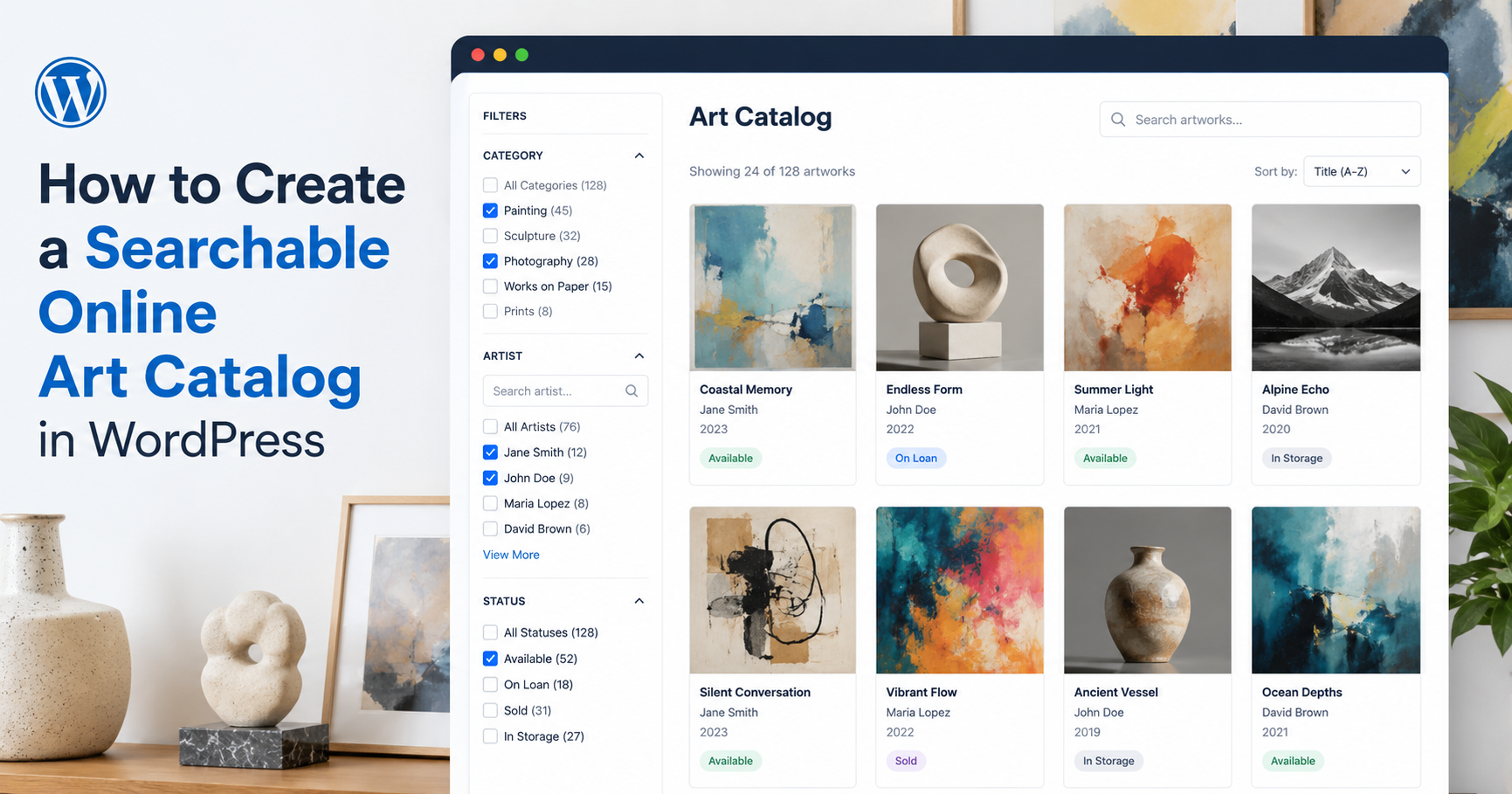
Add the WPIM shortcode to any page or post to display your inventory publicly. You control which fields show, the layout and whether users can filter by category. This works whether you want a customer-facing product catalog or an internal reference list behind a login.

Tracking Stock Quantities

The free version of WP Inventory Manager tracks quantity per item. When stock changes, a delivery comes in, an item is checked out or something is sold, you update the quantity manually from the admin.

For businesses that need automation or more control, WP Inventory Pro adds:

  • Low-stock email alerts: Get notified when any item drops below your set threshold.
  • Quantity adjustment history: See who changed a quantity and when.
  • Minimum/maximum quantity fields: Set reorder points directly in the item record.

Pro runs $79 per year and is the right step for any business managing more than a few dozen SKUs regularly.

Managing Multiple Locations

If you have stock split across more than one place, two stores, a warehouse and a showroom, a main office and a remote site, the Locations Manager add-on is what makes this work.

With Locations Manager, each inventory item carries a quantity per location. You can:

  • See total stock site-wide or drill into a specific location.
  • Assign items to one location or track them across all.
  • Let location managers see and update only their own stock.

Example: A landscaping company has tools stored at two depots. They add both depots as locations in WPIM. Each tool — trailer hitch, post hole digger, trencher — gets a quantity at each location. The office manager can see that Depot A has two trenchers available while Depot B has none, and plan accordingly.

This is the feature that separates a real multi-location business tool from a basic stock counter.

Custom Fields: Tracking What’s Specific to Your Business

Every business tracks different things. A library tracks ISBN and condition. A gym tracks equipment serial numbers and last maintenance date. A restaurant tracks supplier and unit cost.

WPIM’s custom fields let you add any data point you need to an inventory item: text, number, date, dropdown or checkbox. These fields appear in the admin when editing items and can be shown on the front end in your inventory display.

You don’t have to fit your business into a generic template. The fields fit you.

Letting Customers Reserve Items

The Reserve Cart add-on adds a reservation layer to your inventory display. Visitors browsing your catalog can submit a reservation request and you handle the transaction your way.

This is particularly useful for:

  • Equipment rental businesses (hold this item for these dates)
  • Specialty retailers with limited SKUs (reserve before it’s gone)
  • B2B suppliers where quotes precede orders

No payment gateway, no WooCommerce. Just a form that captures intent and reduces your back-and-forth.

Advanced Search for Large Catalogs

Once you have hundreds of items across multiple categories and locations, your team needs to find things fast.

The Advanced Search add-on powers filterable, searchable inventory displays on the front end. Visitors can narrow results by category, custom field value, location or keyword without reloading the page.

Think of it as turning your WordPress inventory into a functional database your team or customers can actually use.

What You Get With WPIM All Access

If you want the full toolkit without picking add-ons one by one, the All Access plan at $199 per year includes everything: WP Inventory Pro, Locations Manager, Reserve Cart, Advanced Search and Advanced User Control.

For businesses managing serious inventory across locations, All Access pays for itself quickly in time saved.

Start Managing Inventory in WordPress Today

Most small businesses outgrow spreadsheets before they realize it. WordPress already powers your site, building your inventory system inside it means one less tool, one less login and one less thing to sync.

WP Inventory Manager’s free version takes less than ten minutes to set up. If you need more such as locations, reservations, advanced search, the paid tiers scale with you.

Get started at wpinventory.com or compare plans to find the right fit for your business.

Frequently Asked Questions

Do I need WooCommerce to use WP Inventory Manager?

No. WPIM runs independently of WooCommerce. It works on any WordPress site, including sites with no ecommerce functionality at all.

Can I show inventory to customers without letting them buy?

Yes. The front-end display shows your catalog, with or without pricing, and visitors cannot check out. You control exactly what’s visible.

How many items can I manage?

There is no hard limit on the number of inventory items. Performance depends on your hosting environment, but WPIM handles catalogs with thousands of SKUs without issue.

Can different staff members manage only their own location’s inventory?

Yes, with the Advanced User Control add-on or the All Access plan. You assign each user to one or more locations, and they only see and edit what’s theirs.

Is there a free version I can try first?

Yes. The free version of WP Inventory Manager is available on the WordPress plugin repository. It covers basic item tracking, categories, and front-end display. Upgrade when you need alerts, locations, or search.

Reviews on WordPress.org

Trusted by thousands of businesses

★★★★★

"Created an online museum for my club. Really impressive plugin. Support was responsive and helpful."

@hackrepair

★★★★★

"Excellent, clean, simple inventory management. Well structured code — use it right away or customize it to your liking."

@techlocally

★★★★★

"We purchased the entire suite. Installation was easy, small issues were fixed immediately, and the guidance during setup was invaluable."

@design4dotcom

★★★★★

"Plugin support was helpful and rapid. Highest mark."

@drgar

★★★★★

"Great support. Very thorough when looking for a solution, and upfront with exactly how to fix it or institute a workaround."

@shoidahl

★★★★★

"I used this plugin and eventually hired the developers for all my WordPress work. Responsive, competent, and clean code. Would recommend to anyone."

@justenhong